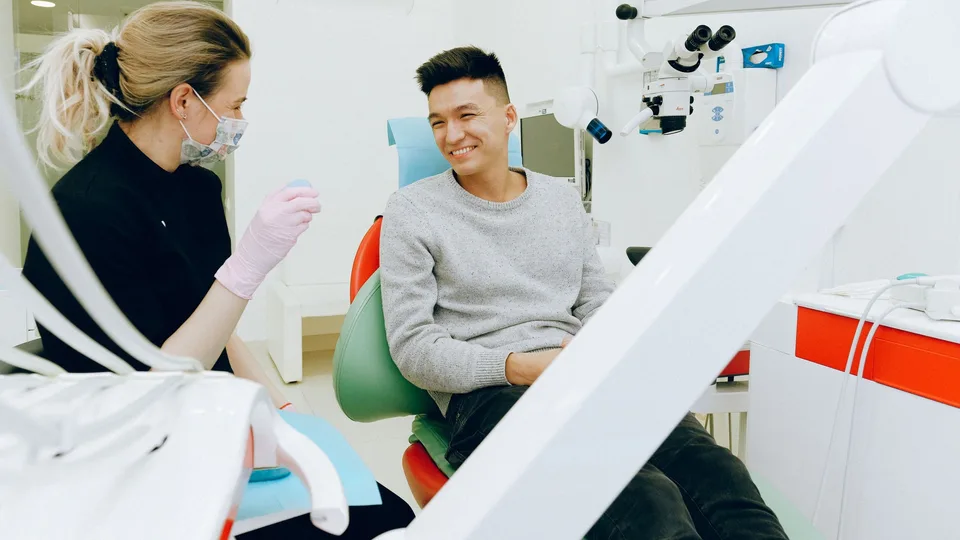
What bruxism is, how to tell if you clench or grind your teeth, why it happens, what it means for your teeth, how a custom-made night guard protects them and what is different in children.
What is bruxism?
Bruxism is the medical term for involuntary teeth grinding or clenching. Daytime bruxism is mostly clenching, when you are concentrating, driving or under pressure, usually without realising it. Night-time bruxism happens during sleep, in short episodes that a partner sometimes hears as a grating sound.
The signs: how to tell if you grind your teeth
- worn, shorter or chipped teeth, and fillings that break;
- sensitivity to cold;
- tired or aching jaw muscles in the morning;
- headaches when you wake up, especially at the temples;
- clicking or pain in the jaw joint;
- tooth marks along the edges of your tongue;
- your partner hears you grinding at night.
Why it happens
Bruxism has several causes, and they usually add up:
- stress and anxiety, especially behind daytime clenching;
- sleep: night-time episodes happen during brief micro-awakenings and are more common in people who snore or have sleep apnoea;
- some medicines, for example certain antidepressants or ADHD medication; don't stop taking them on your own, but talk to the doctor who prescribed them;
- caffeine, alcohol and smoking;
- your bite was long considered the main cause, but today its role appears to be small, which is why we don't file down teeth to make bruxism “go away”.
What happens if you leave it untreated
Left untreated, bruxism wears the teeth down until they become sensitive, causes cracks and can break fillings, crowns, veneers or dental work on implants. Pain in the jaw muscles and the jaw joint can also develop. Lost enamel doesn't grow back, which is why it's worth protecting your teeth early.
How it is diagnosed
At the consultation (250 lei) we ask how you sleep, how you feel in the morning and what medication you take. Then we examine your teeth, tongue, cheeks, jaw muscles and jaw joint. These signs are usually enough for a diagnosis.
A night guard for bruxism: how it is made
The main treatment is a custom-made night guard, which costs 300 lei per arch. One is usually enough, most often for the upper arch. The guard doesn't stop the bruxism, but your teeth press against it rather than against each other, and in many patients the muscle tension eases too.
- The impression. We take an impression of your teeth, and the guard is made in the laboratory to fit their exact shape.
- The fitting. The guard should go in easily, stay in place without pressing and rest evenly on the teeth of the opposite arch. The dentist adjusts it on the spot and shows you how to put it in.
- The check-up. After a few weeks we check the marks on it and adjust it if necessary.
Most people get used to it within a few nights. If it presses, or if your bite still feels different an hour after you've taken it out, come in and we'll adjust it. Shop-bought guards only fit approximately.
How to look after your night guard
- in the morning, rinse it and clean it with a soft brush and a little mild soap, not toothpaste, which scratches it;
- keep it dry, in its case;
- keep it away from hot water, sunlight and radiators, which can warp it, and from pets;
- bring it to every check-up; we make a new one when it wears very thin or cracks.
Restoring worn teeth
Mild wear that doesn't hurt doesn't necessarily need restoring: we protect it with the guard and keep an eye on it. We restore teeth when sensitivity, sharp edges, chips or cracks appear. Minor wear is repaired with composite (250, 400 or 550 lei, depending on size). A badly worn or cracked tooth is better protected by a crown: porcelain-fused-to-metal (1,050 lei) or full zirconia (1,400 lei), which is highly resistant to chipping. Any new dental work should be protected with the guard at night.
Habits that help
- Notice your jaw during the day. At rest, your lips are closed, your teeth slightly apart and your tongue relaxed against the roof of your mouth. An alarm on your phone can remind you to check whether you're clenching your teeth.
- Relax your jaw when you feel the tension, and gently massage your cheeks and temples.
- Give up chewing gum and the habit of chewing pens or biting your nails.
- Less caffeine in the afternoon and evening, no alcohol before bed and, ideally, no smoking.
- Regular sleep, at the same times every day, with no screens for an hour before bed.
- Less stress: physical activity, breathing exercises or talking to a psychologist all reduce tension.
If you snore loudly, your partner notices pauses in your breathing or you wake up tired after a full night's sleep, see your GP: these can be signs of sleep apnoea, which is treated separately.
Teeth grinding in children
Grinding during sleep is common in children, especially while their teeth are changing, and it usually passes by itself. Book a check-up if:
- your child has toothache, jaw pain or a headache in the morning;
- their teeth are visibly wearing down or becoming sensitive;
- they snore, breathe through their mouth or sleep restlessly, signs that are also worth discussing with their paediatrician;
- the grinding continues once their baby teeth have all been replaced.
A children's consultation costs 100 lei. Night guards are rarely recommended for children, because their jaws are growing and their teeth are changing. If we also notice a problem with the bite, it is assessed by Dr. Cristina Împărățel, our orthodontist.
What it costs
| Procedure | Price |
|---|---|
| Consultation | 250 lei |
| Night guard for bruxism, per arch | 300 lei |
| Composite filling, grade 1 / 2 / 3 | 250 / 400 / 550 lei |
| Porcelain-fused-to-metal crown | 1,050 lei |
| Full zirconia crown | 1,400 lei |
| Children's consultation | 100 lei |
For example, a consultation and a night guard for the upper arch cost 550 lei together. You receive the exact price in your written plan, after the consultation.
Frequently asked questions
Can bruxism be cured?
In most cases it doesn't go away completely, but it can be kept well under control: the night guard protects your teeth, and less stress and less caffeine reduce the episodes. In children it often passes by itself.
How can I tell if I grind my teeth in my sleep?
Most often your partner tells you. Other clues are a tired jaw or a headache when you wake up, and teeth that are becoming worn or sensitive; at a check-up, the dentist can see the signs even if you haven't noticed anything.
How long do you need to wear a night guard for bruxism?
Every night, for as long as the bruxism is active. Some patients only need it during more demanding periods; the dentist will tell you what suits your case.
Can teeth grinding cause headaches?
Yes. The muscles that close your mouth reach up to your temples, and their tension during the night often causes headaches in the morning. These often ease once you wear the guard and cut down on clenching during the day.