Veneers correct the colour, shape and small flaws of the front teeth, without braces. Who they suit, ceramic or composite, the steps, prices and aftercare.
What are dental veneers?
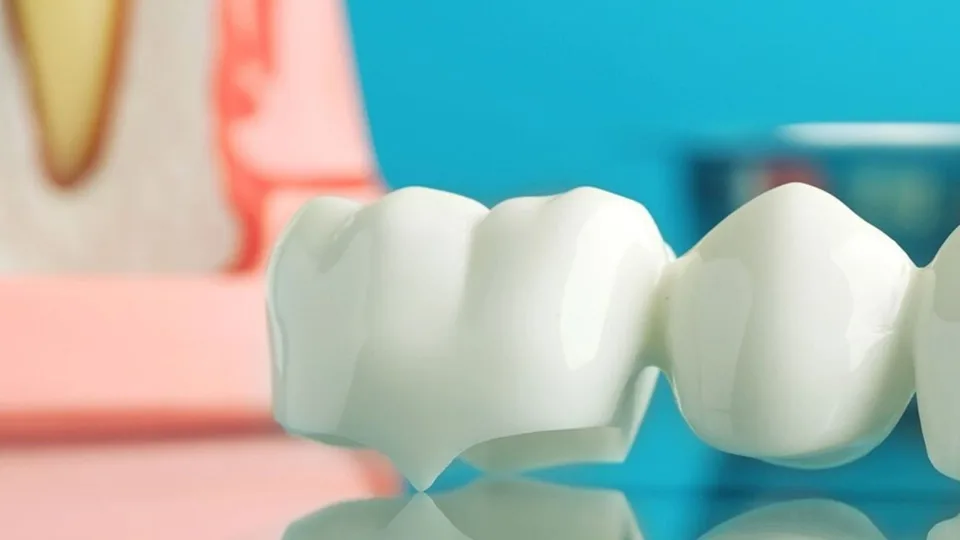
Veneers are thin shells, 0.2 to 0.9 mm thick, made of ceramic or composite and bonded to the visible surface of the front teeth. They change the colour, shape and length of the teeth, close small gaps between them and hide chips. Unlike crowns, which cover the tooth all the way round and call for significant reshaping, veneers need only a very thin layer of enamel to be removed, and sometimes none at all.
Who are they suitable for?
- chipped, worn or unevenly shaped teeth;
- stains that whitening can't remove, for example from too much fluoride or from antibiotics taken in childhood;
- a tooth that has darkened after root canal treatment;
- small gaps between the front teeth;
- slightly rotated or uneven teeth, when you don't want braces;
- a “tired” smile that you would like to even out.
Veneers are only fitted on healthy teeth, or teeth whose treatment has been completed, and on gums free of inflammation. If you grind your teeth at night (bruxism), we recommend a night guard so the veneers don't crack.
When veneers aren't the right solution
Veneers change how the teeth look, not where the roots sit. For very crowded teeth, a misaligned bite or strongly tilted teeth, orthodontic treatment is better, possibly followed by veneers to refine the shape. For teeth with very large fillings or after root canal treatment, a crown may be stronger. At the consultation we tell you honestly which option suits you best.
Ceramic or composite?
| Ceramic veneers | Composite veneers | |
|---|---|---|
| How they are made | in a dental laboratory, from an impression | directly in the clinic, layer by layer |
| Visits | two, 7 to 10 days apart | usually one |
| Appearance | shine and translucency very close to natural enamel | very good, but loses some of its shine over time |
| Colour over time | stable | may stain slightly |
| Average lifespan | 10 to 15 years | 5 to 7 years |
| Repairs | the veneer is replaced | easily repaired in the clinic |
| Price | 2,500 lei per tooth | 1,100 lei per tooth |
How the treatment works
- Cosmetic consultation. We photograph your smile, look at the shape of your face and lips, and choose the shade and shape of the teeth together. We talk about what you expect and what can realistically be achieved.
- Preparation. For ceramic veneers, a very thin layer of enamel is precisely removed, an impression is taken and temporary veneers are fitted, so you aren't left with the prepared teeth on show.
- Try-in and bonding. After 7 to 10 days, the ceramic veneers are tried in, adjusted if needed and permanently bonded. If your gumline is uneven, we can reshape it with the laser at the same stage, for a harmonious result.
Composite veneers are sculpted directly on the tooth in a single visit, with no impressions and no temporaries.
What a natural result looks like
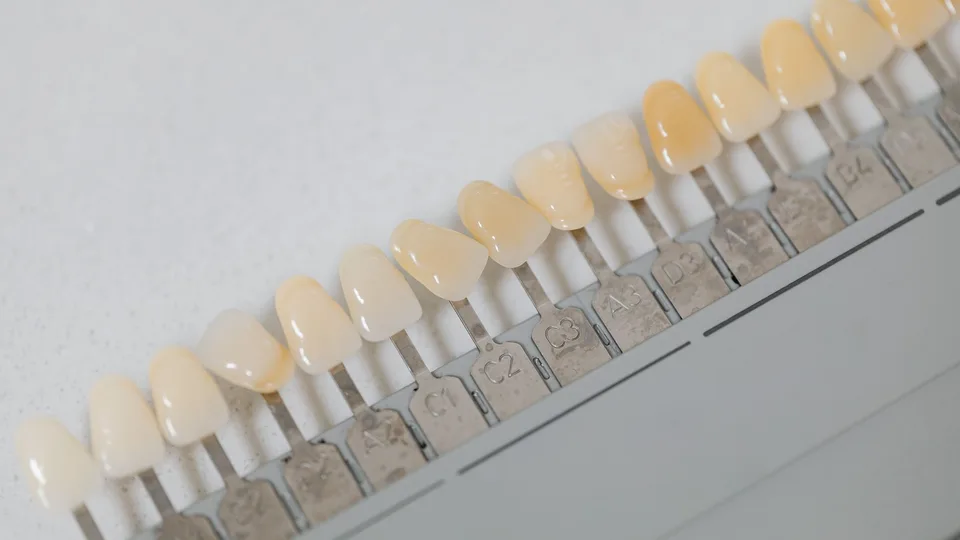
A beautiful smile doesn't mean perfectly white, perfectly even teeth. Natural teeth have slight differences in shade, they are a little more translucent at the edges, and the central incisors are slightly longer than the lateral ones. Well-designed veneers keep these details, which is why nobody can tell they are veneers. We advise choosing a shade that goes with the whites of your eyes and your complexion, not the whitest shade on the guide.
Veneers, crowns or a composite restoration?
For a single chipped tooth, a direct composite restoration (900 lei) may be enough and requires almost no preparation. For several teeth with different shapes and colours, veneers give a uniform result. A crown is the right choice when the tooth has lost a lot of its structure, for example after root canal treatment or a very large filling, because it protects the tooth from fracturing. We choose the option that preserves as much of the natural tooth as possible while giving you the result you want.
What a complete smile makeover costs
For an even smile, veneers are usually placed on the teeth that show when you smile, that is 6 to 10 teeth on the upper arch. With composite veneers, the cost starts at around 6,600 lei for 6 teeth; with ceramic veneers, at around 15,000 lei for 6 teeth. You receive the exact plan, with the number of veneers and the chosen material, after the cosmetic consultation. If your other teeth also need whitening, we include it in the plan before the veneers.
What to ask at the consultation
- How many veneers do I need, and why exactly these teeth?
- How much enamel has to be removed, and can that be avoided?
- Can I see a simulation of the result beforehand?
- What happens if a veneer chips a few years from now?
- Do I need a night guard?
A dentist who answers these questions clearly, even if the answer is “you don't need veneers”, is a dentist you can trust.
How to look after them
- exactly like natural teeth: brush twice a day, clean between your teeth and have a professional cleaning every 6 months;
- don't use your front teeth to crack or tear hard things: nutshells, bottle caps, thread, fingernails;
- if you grind your teeth, wear your night guard;
- veneers can't be whitened, so if you also want your other teeth whitened, do it before getting veneers.
Frequently asked questions
Can people tell they're veneers?
Not if they are well designed. Ceramic has the translucency of enamel, and the shape is tailored to your face, not to a standard template.
Does getting veneers hurt?
The minimal enamel preparation is done under local anaesthetic, if needed. Once the veneers are bonded, there is no pain.
What if a veneer comes off?
It is re-bonded in the clinic in a few minutes. This rarely happens, usually after a knock.
How many veneers do I need?
It depends on your smile. For a uniform result, 6 to 10 veneers on the upper arch are usual, but sometimes just one is enough, for a single darkened tooth.