Metal, ceramic, sapphire or Spark aligners? The differences in appearance, comfort, treatment time and price, explained by an orthodontist, plus what happens after treatment.
When is orthodontic treatment needed?
Crowded teeth or gaps between teeth, protruding teeth, and a deep bite, crossbite or open bite are all corrected with orthodontic treatment. It isn't just about looks. Straight teeth are easier to clean, so they get fewer cavities and gum problems, they wear evenly and they protect your jaw joint. A correct bite also helps with chewing, and sometimes even with speech.
Treatment can be done at any age. For children, the first orthodontic check-up is recommended at around 6 or 7, when many problems with the way the jaws develop can be corrected simply, with removable appliances. In adults treatment takes a little longer, but the result is just as good.
Fixed braces
A bracket is bonded to each tooth, and the brackets are linked by a wire that gradually moves the teeth. Adjustment visits are every 4 to 8 weeks. We offer three options:
- Metal braces (2,500 lei) are the most durable and the most affordable. The self-ligating version (2,800 lei) has less friction and can make visits shorter.
- Ceramic braces (3,000 lei) have tooth-coloured brackets and are much less noticeable.
- Sapphire braces (3,500 lei) have clear brackets that are almost invisible at normal conversation distance.
The final price depends on your case and on whether one or both arches are treated; you receive it in writing in your treatment plan, before you start.
Fixed braces work around the clock and don't depend on the patient's discipline, which is why they are the safe choice for complex cases. In return, they call for careful hygiene and for avoiding very hard or sticky foods, which can knock brackets off.
Clear aligners
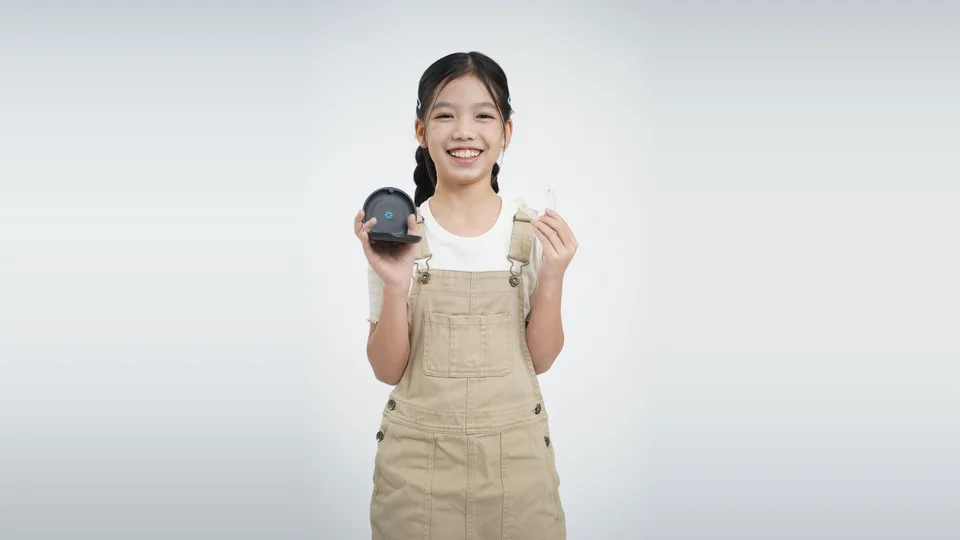
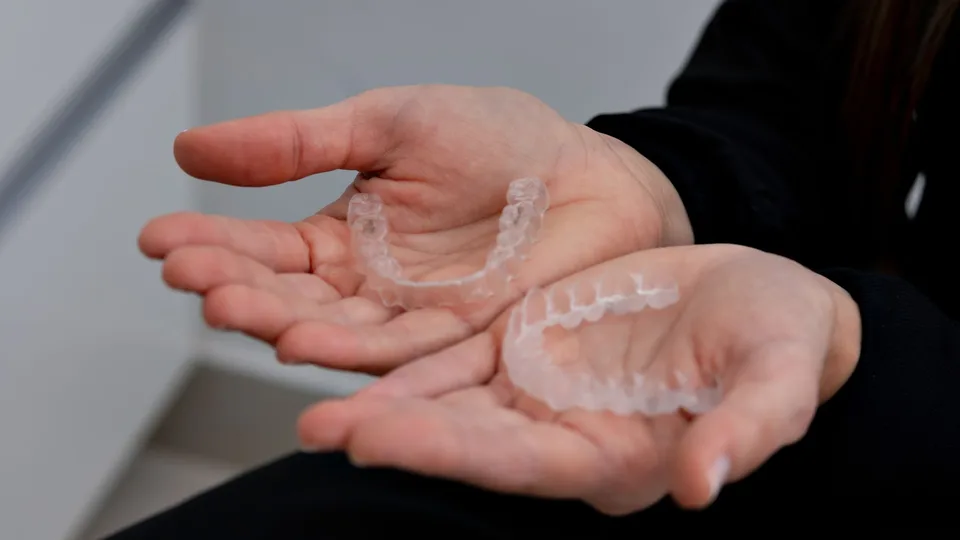
Spark aligners are clear trays made from a digital scan of your teeth. Each set moves the teeth by a fraction of a millimetre and is changed every one or two weeks. They are virtually invisible, come out for meals and brushing, and have no brackets to rub against your cheeks. The key requirement is discipline: they have to be worn 20 to 22 hours a day. If you take them out too often, treatment takes longer.
| Spark option | One arch | Both arches |
|---|---|---|
| Spark 10 (minor corrections) | 4,500 lei | 7,500 lei |
| Spark 20 (moderate cases) | 8,000 lei | 13,000 lei |
| Spark Advanced (complex cases) | 13,000 lei | 18,000 lei |
How to choose
| Criterion | Fixed braces | Aligners |
|---|---|---|
| Appearance | visible (metal) or discreet (ceramic, sapphire) | almost invisible |
| Complex cases | yes | depends on the case |
| Patient discipline | doesn't matter | essential, 20 to 22 hours a day |
| Eating and brushing | some restrictions | no restrictions, aligners come out |
| Check-ups | every 4 to 8 weeks | every 6 to 10 weeks |
In short: if you don't want your orthodontic treatment to show and you are sure you'll wear your aligners conscientiously, they are an excellent choice. If your case is complex or you'd rather not have to think about your appliance at all, fixed braces (perhaps ceramic or sapphire) are the safer option.
Orthodontics for children
For children we also use removable appliances, orthodontic trainers or palatal expanders, which guide the growth of the jaws. Treated while the child is still growing, many problems are solved more simply and quickly than in adults, sometimes without extractions. Habits such as thumb-sucking, mouth breathing or pushing the tongue between the teeth also affect development and are corrected early.
How treatment works
- Orthodontic consultation (250 lei): examination, photos and a talk about what bothers you.
- Impressions and a study model, plus any X-rays the orthodontist recommends.
- Treatment plan: the proposed option, the estimated duration and the total cost, in writing.
- Fitting the braces or receiving your first aligners.
- Regular check-ups (adjusting fixed braces costs 100 lei per arch).
- Removing the braces and fitting a retainer.
How long it takes and why the retainer matters
Most treatments take between 12 and 24 months; minor corrections with aligners may take only a few months. After treatment, teeth tend to drift back towards their old position, especially in the first year. That's why you wear a retainer: a thin wire bonded behind the front teeth (200 lei) or a clear tray worn at night (400 lei). Without a retainer, the result you worked so hard for can be lost.
Oral hygiene during treatment
With fixed braces, food easily gets caught around the brackets and under the wire. Brush after every meal with an orthodontic toothbrush with V-shaped bristles, and use interdental brushes for the spaces under the wire. A water flosser helps a lot. Plaque left around the brackets for years can leave white spots on the enamel that only become visible once the braces come off; that's why we recommend a professional cleaning every three to six months (an orthodontic hygiene session costs 300 lei).
With aligners, hygiene is simpler but has its own rules: take them out for every meal, brush your teeth before putting them back in and rinse them with cold water. If you put them on over unbrushed teeth, bits of food stay pressed against the enamel for hours and the risk of decay goes up.
The first days with braces
After fitting and after each adjustment, your teeth are tender to pressure for two or three days. Eat soft food during this time; an ordinary anti-inflammatory helps. At first the brackets may rub your cheeks; the orthodontic wax we give you solves this until the inside of your mouth gets used to them, usually within a week.
Frequently asked questions
Do braces hurt?
For the first two or three days after fitting and after each adjustment, your teeth are tender to pressure. It passes on its own; an ordinary anti-inflammatory helps.
Can I get braces at 40?
Yes. In adults treatment takes a little longer, but the result is just as good. Many adults choose aligners because they are discreet.
What is a retainer?
A thin wire bonded behind the teeth or a tray worn at night, which holds the teeth in their new position after treatment.
Can I play sport or a wind instrument?
Yes. For contact sports we recommend a protective mouthguard. For wind instruments, aligners can be taken out, and with fixed braces you get used to playing within a few weeks.